
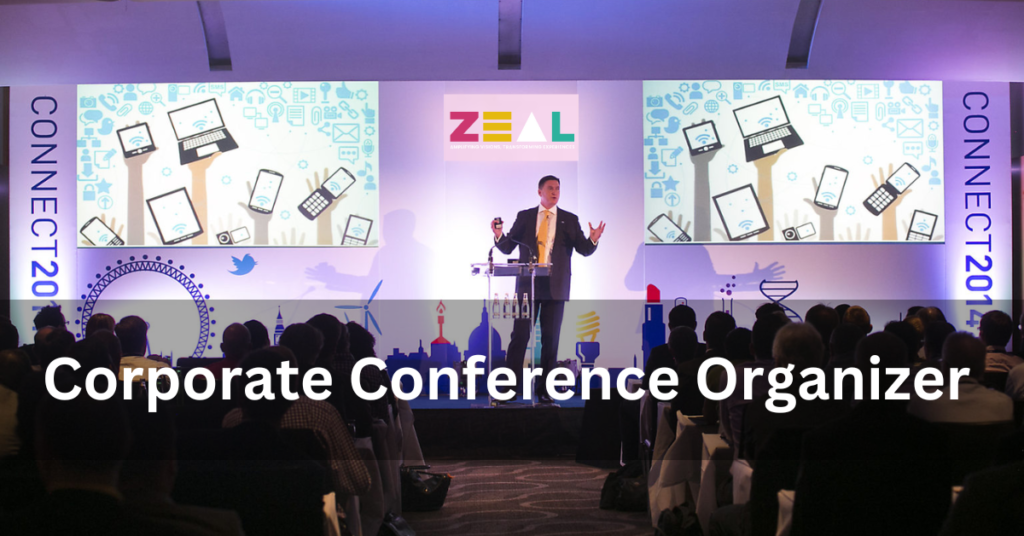
Let’s be honest — nobody remembers the conference that ran like clockwork. Instead, they remember the one where the mic died mid-keynote, the food ran out before half the guests were served, or the speaker arrived to find their slides missing.
A great conference feels effortless. However, behind that effortlessness is an enormous amount of strategy, coordination, and preparation. That is exactly what a professional corporate conference organizer does.
Whether you are hosting 50 senior leaders or 500 industry professionals, partnering with the right event team is one of the smartest decisions your business can make.
A Conference Is Never Just a Meeting
Think about what your conference actually needs to do. It might need to build trust with clients, fire up your sales team, launch a product, or position your brand as an industry thought leader.
That is a lot to ask of a single day — or even two.
Moreover, attendees notice everything. A slow registration queue, a stage that looks thrown together, sessions that drag on too long, and unclear signage—each of these chips away at the experience you worked so hard to create.
One small thing going wrong does not ruin an event on its own. However, five small things together? That is a completely different story.
This is why experienced businesses do not leave conference planning to an already-stretched internal team. Instead, they bring in people who do this every single day.
What Does an Event Company Actually Do?
More than most people expect.
Yes, they handle the venue and the décor. But a good event company is really a strategic planning partner. In fact, they sit down with you before a single booking is made and ask the questions that matter most:
- What do you want attendees to walk away feeling?
- Who is your audience — employees, clients, dealers, or investors?
- Is the goal to inspire, educate, sell, or celebrate?
- How do you define success for this event?
Once those answers are clear, they build everything around them. Every design choice, session format, speaker brief, and hospitality detail connects back to your business objective. As a result, nothing is added for its own sake.
That is what separates a good conference from a forgettable one.
Getting the Venue Right (It Is Trickier Than It Looks)
A beautiful venue is not automatically the right venue.
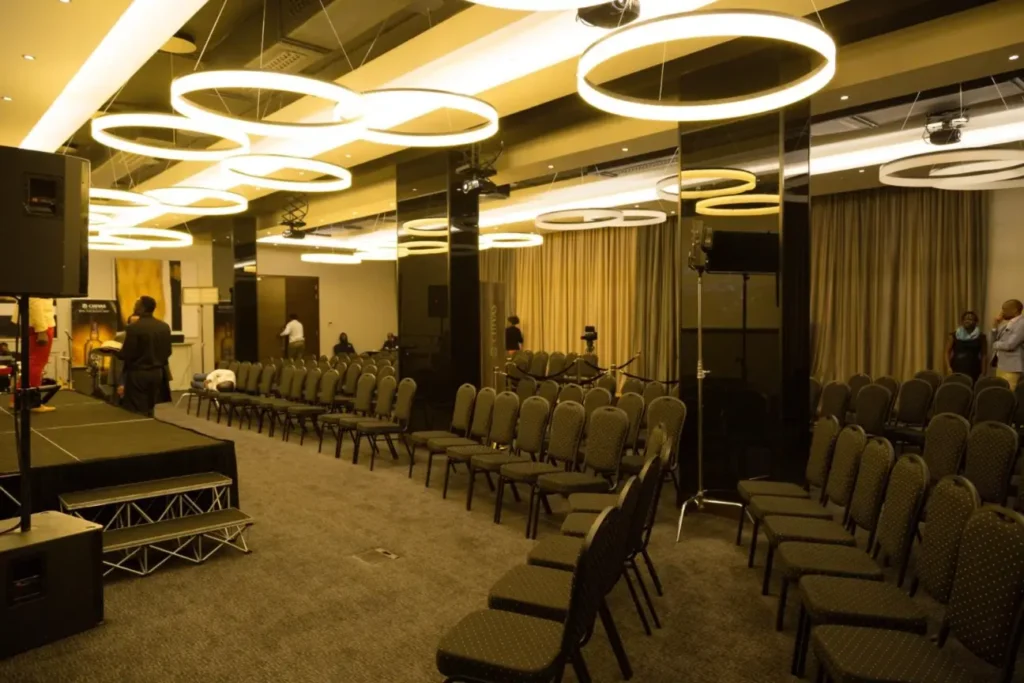
You need a space that genuinely works — one where the stage is visible from every seat, the sound does not echo, the internet holds up under pressure, there is enough parking, and guests can actually find the registration desk without asking three people for directions.
What a Site Visit Really Covers
A professional event company does not just browse venue websites. Instead, they visit the space in person—walking the floor, checking the lighting, testing the acoustics, measuring the stage, observing the back-of-house flow, and carefully considering how 300 people will move through the space over an eight-hour day.
For conferences in Bangalore, especially, location matters enormously. Traffic here is not just an inconvenience — it can genuinely affect how many people show up on time. Consequently, an experienced event company in Bangalore knows which venues work best for which audiences, whether you are drawing guests from Whitefield, Koramangala, Hebbal, or Indiranagar, or flying them in from out of town.
Budgeting: Where Most Conferences Go Wrong Early
Here is a pattern that plays out more often than it should. A company sets a generous budget, spends heavily on the venue, and then realizes—two weeks before the event—that barely anything is left for branding, technology, or guest kits.
A professional event company prevents this by building a complete, realistic budget from day one. Everything gets a line item:
Venue, food and beverages, stage design, sound and lighting, LED screens, branding and print, speaker travel, delegate kits, registration tools, photography and videography, manpower, security, transport, and a contingency buffer for the things nobody predicted.
That last part matters more than people think. Conferences almost always need something extra at the last minute. Therefore, having a buffer means you can say yes without panicking.
Branding That Actually Feels Like You
Your conference should feel like your company — not like a generic corporate event that could belong to anyone.
Good event branding goes well beyond putting your logo on a backdrop. Rather, it shapes the entire visual and emotional experience—from the entrance arch guests walk through on arrival to the welcome kit on their seat to the graphics on the LED screens behind the speaker.
Why the Stage Deserves Special Attention
When branding is done well, guests feel like they are inside your brand’s world. When it is done poorly — too cluttered, inconsistent, or clearly rushed — it quietly damages the credibility you are trying to build.
Furthermore, the stage deserves real care. Every photo, every video clip, and every social media post from the day will feature it prominently. Therefore, it should look polished, purposeful, and unmistakably yours.
Speakers and Agenda: The Heart of the Conference
Even the most beautifully produced conference falls flat if the sessions do not land.
A strong agenda is not simply a list of speakers and topics. Instead, it is a carefully designed experience — one that keeps energy up, respects attendees’ attention spans, balances information with interaction, and builds toward a clear conclusion.
How to Keep Energy Up Throughout the Day
Experienced event companies know that back-to-back speeches for three hours is a recipe for people checking their phones. As a result, they push for variety: a keynote, then a panel, then a break, then a focused workshop, then a networking session. Sessions should breathe rather than suffocate.
Speaker coordination matters just as much. The event team sends clear briefs to speakers well in advance, collects and tests presentations before the event, arranges green rooms, and rehearses stage entries. Consequently, speakers walk on feeling confident and prepared—and that energy is genuinely contagious.
Technology: The Part That Can Make or Break Everything
A mic that cuts out. Slides that will not load. A live stream that freezes thirty seconds in.
Technology failures at a conference do not just cause inconvenience. In fact, they damage your brand’s image in real time, in front of exactly the audience you were trying to impress.
Running Rehearsals the Right Way
A professional event team runs thorough technical rehearsals before the doors open. Every microphone, screen, laptop connection, streaming platform, and internet backup gets tested — and then tested again — before a single guest walks in.
For hybrid conferences, the standard is even higher. Online attendees need to feel like genuine participants, not people watching a grainy livestream as an afterthought.
Additionally, modern conferences benefit from tools like QR code check-ins, event apps, live polling, real-time Q&A, and RFID tracking. A good event company knows which tools add real value for your audience and which ones simply create unnecessary complexity.
First Impressions Begin at Registration
Before your CEO delivers the opening address, before the first session begins, before the coffee is poured—your guests are already forming an opinion at the registration desk.
A long queue, a confused volunteer, a missing badge, or an unclear sign is not a small thing. On the contrary, it is the very first thing.
A well-planned registration area has enough counters for the expected footfall, trained staff who know the process, clear signage that confidently directs guests, and a system that moves people through quickly and without fuss.
For larger conferences, separate counters for VIPs, speakers, media, and walk-ins make a real difference. It is a small detail with a significant impact.
Hospitality: People Remember How They Were Made to Feel
You can have the best agenda in the world. However, if guests spent the day in uncomfortable chairs, could not find water during the afternoon session, or waited forty-five minutes for lunch, that is what they would carry home with them.
Hospitality is not a luxury. Rather, it is a fundamental part of the event.
Planning Food and Comfort for a Full Day
A professional event company considers the full guest journey: Arrival, registration, seating, tea breaks, lunch, afternoon energy dips, and the day’s close. The team plans menus with the audience clearly in mind, ensures vegetarian and dietary options carry clear labels, and gives VIP guests the level of attention that reflects their importance to your business.
Simple things — a well-stocked help desk, clear directional signage, a cool room on a hot Bangalore afternoon — signal clearly that the company hosting this event genuinely cares about the people inside it.
Vendor Coordination: More Complex Than It Looks
A mid-sized conference might involve ten or more separate vendors. The venue team, the decorator, the sound and lighting engineers, the LED screen supplier, the printer, the caterer, the photographer, the videographer, the manpower agency, and the transport partner.
Each vendor has their own schedule, requirements, and definition of “on time.”
Without a central coordination point, things fall through the cracks. For instance, the decorator arrives when the AV team is still setting up, the badges sit in the wrong location, or the catering team needs kitchen access, but nobody has informed venue security.
An event company manages all of this through one production schedule, clear responsibilities, and a single point of contact for every vendor. When something does not go according to plan — and something always does — the team solves it before it ever reaches you.
Handling the Unexpected
No matter how thorough the planning, conferences have a way of throwing surprises. A speaker’s flight gets delayed. A presentation file becomes corrupted. More guests arrive than expected. The internet drops twenty minutes before the keynote.
The difference between a stressful event and a smooth one is not the absence of problems. Rather, it is the presence of a team that anticipated them.
How Backup Planning Works in Practice
Experienced event companies prepare contingency plans as a matter of course. The team keeps extra equipment, emergency contacts, zone-specific staff, and clear escalation processes on standby throughout the day. When something goes wrong, they handle it quietly and quickly — away from guests, without disrupting the flow of the event.
This calm, behind-the-scenes approach to problem-solving is one of the most underrated advantages a professional team provides.
Engagement: Because Attendees Are Not Passive Anymore
Today’s conference attendees are not content to sit in rows and listen for eight hours. They want to participate, connect, contribute, and share.
Fortunately, creating genuine engagement does not require gimmicks. It simply requires thoughtful design.
Live polls can shape the direction of a panel discussion. Networking sessions with a clear purpose give guests a real reason to connect. Product demo zones let attendees explore at their own pace. A well-timed Q&A makes speakers feel accessible. Additionally, a photo opportunity that reflects the brand gives guests something worth sharing online.
Engagement activities work best, however, when they serve the conference’s core objective—rather than simply fill time between sessions. An experienced event company knows the difference.
Why Bangalore Businesses Especially Need the Right Partner
Bangalore’s corporate ecosystem is unlike most other cities in India. The pace is faster, the audience is more demanding, the event calendar is packed, and the logistics — particularly traffic — require serious advance planning.
Venues in areas such as Manyata Tech Park, Whitefield, Electronic City, and Hebbal each present their own access challenges. Getting vendors in and out during peak hours, managing guest arrival timings, and coordinating setup across multiple floors or buildings — these are not things you want to figure out for the first time on event day.
Local Knowledge That Makes a Real Difference
A local event management company in Bangalore brings years of hands-on experience navigating exactly these challenges. The team knows which venues have strong backup power, which caterers can reliably serve 400 people within a tight window, and which roads will cause delays on a Tuesday morning.
For businesses looking for event management services in Bangalore, that local knowledge is not just helpful—it is genuinely invaluable.
After the Conference Ends, the Work Is Not Quite Done
A good event company does not disappear once the closing remarks are delivered.
Post-event follow-up is where much of the long-term value gets built. Feedback surveys capture honest attendee responses. A highlights video extends the event’s reach on social media. Thank-you communications strengthen relationships. Furthermore, a structured report shows leadership exactly what the event delivered and why it mattered.
Measuring outcomes—registrations versus attendance, session ratings, lead generation, sponsor visibility, and social reach—helps you understand ROI clearly and plan better next time.
When the team handles post-event work properly, the conference continues to create value long after the last guest has left the room.
Choosing the Right Event Company
Not every event company suits corporate conferences. Some specialize in weddings or social events. Others have strong ideas but lack the vendor network or technical depth to execute at scale.
When assessing a potential partner, look beyond the portfolio. Ask how they handle pressure. Find out what their backup plan was for their last major event. Ask how they communicate with clients both during planning and on the day itself.
The right partner will feel organized and confident without dismissing your concerns. They will push back thoughtfully when an idea needs refining. Most importantly, they will add genuine value — not just follow instructions.
That combination of competence and real partnership is ultimately what separates an event that simply runs from an event that truly resonates.
A Quick Checklist to Keep Planning on Track
When working with an event company, use this as your shared reference:
- Conference objective defined
- Target audience identified
- Budget set and allocated
- Event format confirmed
- Venue selected and visited
- Agenda planned and timed
- Speakers confirmed and briefed
- Branding concepts approved
- Stage design finalized
- AV systems confirmed
- Registration process set up
- Food and hospitality planned
- Vendor timeline created
- Event promoted to the target audience
- Technical rehearsal completed
- Backup plans prepared
- On-site execution managed
- Feedback collected post-event
- ROI measured and documented
- Post-event report delivered
Common Mistakes a Good Event Company Helps You Avoid
Starting the planning process too late. Choosing a venue that looked great in photos but did not work in practice. Underestimating how long registration takes for 400 people. Failing to test the internet before a hybrid session begins. Overwhelming the stage with too many sponsor logos. Running out of food at 1:30 PM.
These are not unusual mistakes. In fact, they happen at conferences everywhere, every year. A professional team has seen them all and knows precisely how to prevent them.
Plan Your Corporate Event
The Bottom Line
A flawless conference does not come from luck. Instead, it comes from the right team, with the right experience, working alongside you from the first planning conversation to the final post-event report.
The best conferences feel effortless for the people attending them. Behind that ease, however, is a great deal of deliberate, skilled work.
If you are planning a conference in Bangalore — whether it is an internal leadership summit, a client conference, a dealer meet, or a large industry event — partnering with an experienced event company is not simply a convenience. It is the decision that determines whether your event is remembered for the right reasons.
FAQ’s
1. Why should a business work with an event company for a conference?
Because professional event planners handle everything from venue selection and budgeting to branding, speaker coordination, technology, hospitality, and on-site execution. As a result, your internal team can focus on the business rather than the logistics.
2. What does an event company actually manage?
Everything — strategy, venue, agenda, speaker support, stage design, branding, registration, guest experience, technical production, vendor coordination, and post-event reporting.
3. How does an event company improve the guest experience?
By thinking through every touchpoint—from how guests are greeted at registration to how sessions are paced, what they eat, and whether they leave feeling the day was genuinely worth their time.
4. Why does local experience matter for Bangalore conferences?
Bangalore presents unique logistical challenges: Heavy traffic, dense venue competition, complex vendor timelines, and a demanding corporate audience. Consequently, a local team that has navigated all of this before is a significant advantage.
5. How far in advance should you hire an event company?
For a large conference, ideally three to six months out. For a smaller event, four to eight weeks is generally workable. The earlier you start, however, the better your options for venues, speakers, and vendors will be.
6. What are the main benefits of hiring a corporate event management company?
Better planning, reduced internal stress, stronger vendor management, more professional branding, smoother guest experiences, proper technical setup, effective risk handling, and measurable results.
7. Can an event company manage hybrid conferences?
Yes. A good team handles live streaming, cameras, audience engagement tools, online Q&A, and all the technical coordination needed to make both in-person and virtual attendees feel equally included.
8. How do you pick the right event company for a corporate conference?
Look at their experience with similar events, their vendor network, how they communicate under pressure, and — most importantly — whether they feel like a genuine partner rather than just a service provider.